
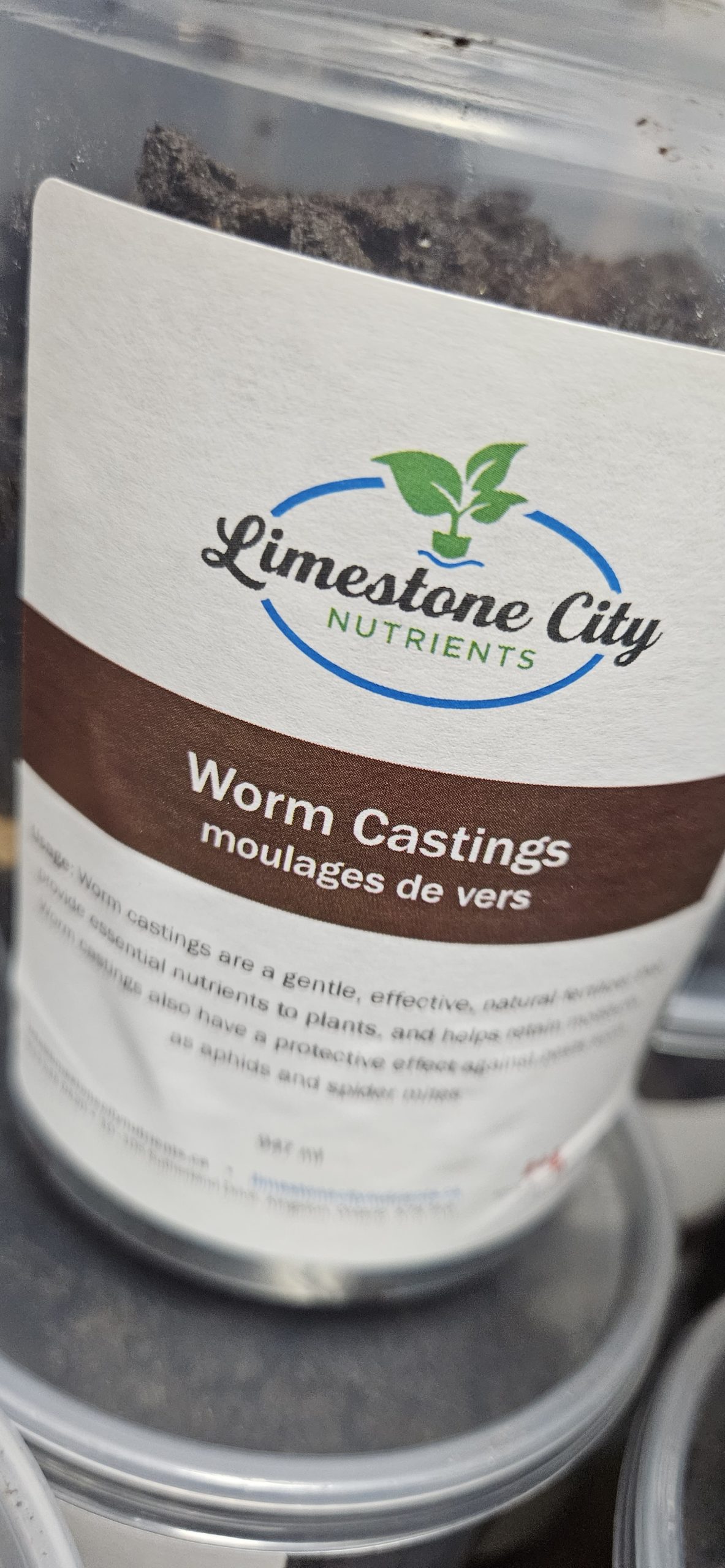
Description
- Improves soil structure — Castings enhance aeration and moisture retention, helping sandy soils hold water and clay soils loosen up.
- Acts as a natural insect repellent — Enzymes in castings deter pests like aphids, spider mites, and whiteflies, reducing the need for chemical pesticides.
- Suppresses soil‑borne diseases — Beneficial bacteria in castings help prevent pathogens from infecting seeds and seedlings.
- Boosts nutrient availability — Castings contain nitrogen, phosphorus, potassium, and micronutrients like zinc and iron, plus microbial activity up to 20× higher than surrounding soil.
- Enhances water retention — They act like tiny sponges, improving water‑holding capacity by 20–40%, which supports drought resilience.
- Improves seed germination — Castings help soil breathe and hold moisture, supporting strong sprouting and early growth.
- Stabilizes soil pH — Vermicast tends to sit near neutral pH and can help buffer acidic or alkaline soils.
- Reduces soil compaction and erosion — Their granular structure improves drainage and prevents crusting and compaction.
- Provides hormone‑like growth stimulators — Castings contain compounds that promote root development and overall plant vigor.


